
Dropshipping on Walmart has become one of the more talked about ways to sell online without holding inventory. A lot of sellers who are tired of the constant competition on other platforms are turning to Walmart Marketplace because it offers a fresh audience and a different set of rules to work with. If you are trying to figure out how the process actually works, especially inside Seller Center Walmart, this guide walks through everything from account setup to daily order management in plain language.
What Is Walmart Dropshipping
Dropshipping on Walmart means you list products for sale on Walmart Marketplace without ever touching or storing the items yourself. When a customer places an order, you (or a supplier you work with) ship the product directly to that customer. You never see the box, and in most cases you never see the product in person either. Your job is to manage the listing, the pricing, the customer questions, and the order flow.
Walmart runs this business model a bit differently than some other marketplaces. The company has specific expectations for how orders get fulfilled, how fast they ship, and how sellers communicate with buyers. Understanding these expectations early saves a lot of frustration later, especially once your store starts getting real sales volume.
Getting Started With Seller Center Walmart
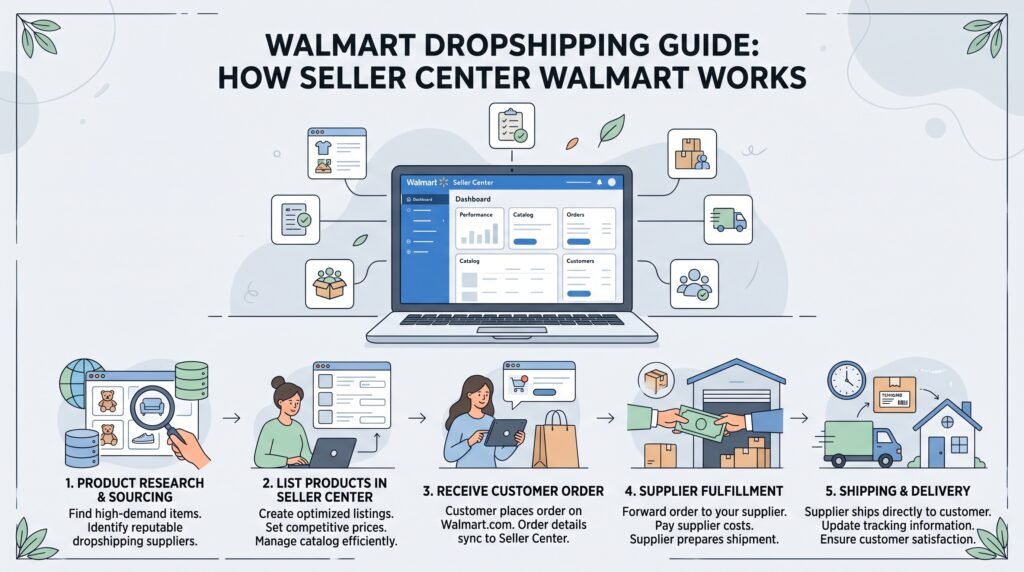
Seller Center Walmart is the dashboard where approved sellers manage their entire storefront. Think of it as mission control for your Walmart business. Everything from product listings to order tracking to payment reports lives inside this one platform.
Creating a Walmart Seller Account
Before you can touch Seller Center Walmart, you need to apply and get approved as a Walmart Marketplace seller. The application asks for basic business information such as your legal business name, tax details, and a description of the products you plan to sell. Walmart reviews applications manually in many cases, which means approval is not instant the way it might be on some other platforms.
Once your application is approved, you get access to the dashboard where you can start building out your catalog. This is also where you connect your bank account for payouts, set your shipping templates, and configure how you want returns to be handled.
Approval Requirements You Should Know
Walmart tends to favor sellers who already have some track record of selling online, a working business website or brand presence, and products that fit within categories the company actively wants to grow. New sellers with no history are not automatically disqualified, but having clear documentation and a professional presentation of your business does help move things along.
It is worth being patient during this stage. Rushing through the application with incomplete details is one of the more common reasons approval gets delayed.
How Dropshipping Works Inside Seller Center Walmart
Once you are in, the daily workflow inside Seller Center Walmart becomes fairly routine. You upload products, set your pricing, and wait for orders to come in. When they do, you pass that order along to your supplier, who ships it out under the timeline Walmart expects.
Listing Products the Right Way
Good listings matter just as much on Walmart as they do anywhere else. Product titles need to be clear and accurate, images should be high quality, and descriptions should answer the questions a buyer would naturally have. Walmart also has specific formatting rules for things like bullet points, brand names, and category assignments, so it helps to read through their listing guidelines before uploading in bulk.
Pricing is another area where dropshippers need to pay close attention. Walmart shoppers tend to compare prices closely, and the platform itself factors pricing into how often your listing gets shown. Setting prices that are too high compared to competitors can quietly bury your product, even if the listing itself is well written.
Managing Orders and Fulfillment
Once an order comes through, the clock starts. Walmart expects orders to ship within a set window, usually one or two business days depending on the shipping method you selected during setup. This is where working with a reliable supplier becomes important. If your supplier is slow to confirm or ship orders, that delay reflects directly on your seller account, not on the supplier.
Tracking numbers need to be uploaded promptly as well. Sellers who consistently miss shipping windows or fail to provide tracking information risk having their account flagged, which can affect visibility or even lead to suspension in more serious cases.
Rules and Policies for Walmart Dropshippers
Walmart does allow dropshipping, but it comes with conditions. The company cares less about how you fulfill orders and more about whether the customer experience meets their standards.
Walmart’s Dropshipping Policy
The core rule is simple: however you choose to fulfill an order, the customer should never know or need to know that a third party was involved. Packaging should not include branding from another retailer, invoices from other companies should not be included in the box, and the product itself needs to match what was advertised in the listing.
Sellers are also expected to handle returns and customer service directly. Even if your supplier physically processes the return, the responsibility for resolving the issue with the customer sits with you as the seller.
Shipping and Delivery Expectations
Walmart places a strong emphasis on delivery speed. Listings that offer faster shipping options tend to perform better in search results and are more likely to win the featured offer spot on a product page. Sellers who dropship internationally or rely on suppliers with long processing times often struggle here, since slower delivery windows can hurt both visibility and customer satisfaction ratings.
Benefits of Dropshipping on Walmart Marketplace
There are a few reasons sellers are drawn to this model. You do not need to invest in inventory upfront, which lowers the financial risk of testing new products. Walmart also brings a large built in customer base, so sellers are not solely responsible for driving their own traffic the way they might be with an independent online store.
Another advantage is the platform’s reputation. Many shoppers trust Walmart as a brand, and that trust can transfer to your listings even if they have never heard of your specific business before.
Common Challenges Sellers Face
Dropshipping on Walmart is not without its difficulties. Profit margins can be thin once you account for Walmart’s referral fees and the cost of goods from your supplier. Competition within popular categories is often intense, with many sellers listing similar or identical products.
Supplier reliability is another common pain point. Since you depend on someone else to fulfill every order correctly and on time, choosing suppliers carefully and monitoring their performance regularly is not optional, it is part of running the business well.
Account health is something else to watch closely. Walmart tracks metrics like order defect rate, on time shipping, and cancellation rate. Letting these numbers slip can limit your ability to grow or, in worse cases, put your account at risk.
Tips for Long Term Success
Sellers who do well with Walmart dropshipping over time tend to share a few habits. They test products in small batches before committing to a large catalog, they build relationships with a small number of dependable suppliers rather than spreading themselves too thin, and they check their Seller Center Walmart dashboard regularly instead of only logging in when something goes wrong.
Pricing discipline also matters. Rather than racing to the bottom on price, successful sellers often focus on categories where they can offer something slightly different, whether that is better images, more accurate descriptions, or simply more reliable shipping than their competitors.
Frequently Asked Questions
Is dropshipping allowed on Walmart Marketplace? Yes, as long as the seller follows Walmart’s policies around packaging, branding, and customer service responsibility.
How long does Walmart seller approval usually take? It varies by application, but sellers should expect the review process to take anywhere from a few days to a few weeks depending on the completeness of the application and current review volume.
Do I need my own website to sell on Walmart? Having one is not always required, but it can strengthen your application and give buyers more confidence in your brand.
What happens if my supplier ships late? Late shipments count against your seller account even if the delay was caused by your supplier, which is why choosing dependable suppliers matters so much.
Final Thoughts
Walmart dropshipping can be a solid path for sellers who are willing to treat it like a real business rather than a side experiment. Success mostly comes down to picking the right products, working with suppliers who actually deliver on time, and staying on top of the tools available inside Seller Center Walmart. The platform rewards sellers who pay attention to the details, and over time those small habits tend to add up to a store that performs consistently rather than one that struggles to keep up.