
eBay dropshipping can be an attractive way to start selling online without purchasing and storing large amounts of inventory. Instead of keeping products in your own warehouse, you work with a supplier that handles fulfillment and sends orders directly to your customers.
The important part is understanding that not every form of dropshipping is allowed on eBay. The platform permits dropshipping when sellers work with wholesale suppliers or have the appropriate arrangement to sell their products. However, eBay does not allow sellers to list an item and then purchase it from another retailer or marketplace after receiving an order, with that retailer shipping the product directly to the customer.
This distinction matters for anyone researching Amazon to eBay dropshipping software. Software can help with product research, listing management, pricing, inventory monitoring, and order workflows, but software does not make a restricted sourcing model compliant.
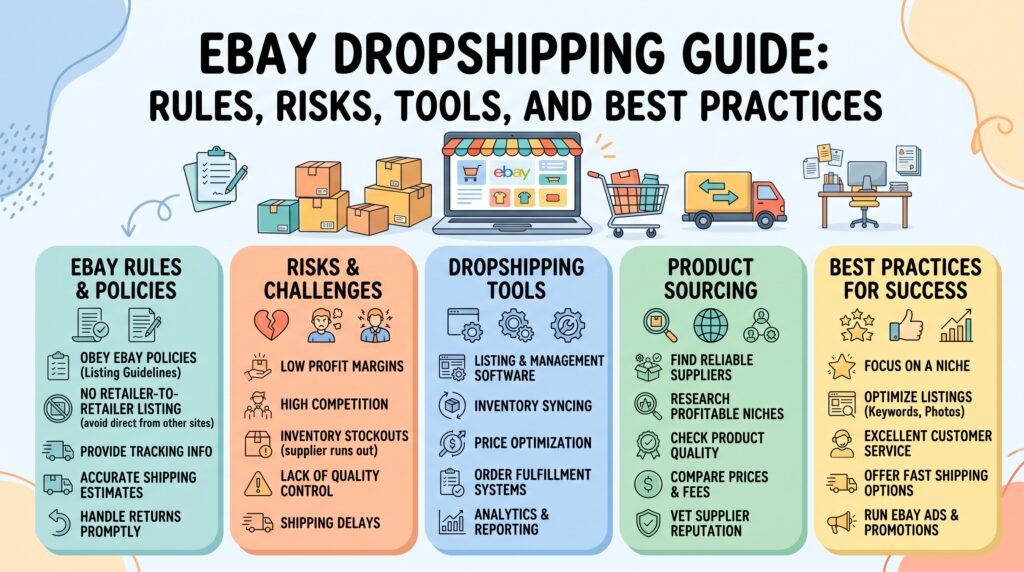
What Is eBay Dropshipping?
eBay dropshipping is a selling model in which the seller lists products on eBay while a third party handles the physical fulfillment. The seller may never personally store or handle the product.
For example, a seller may have an agreement with a wholesale supplier. The seller lists an approved product on eBay, a customer places an order, and the wholesale supplier ships the product to that customer. The eBay seller remains responsible for the transaction and the promises made in the listing.
This can reduce the need for warehouse space and large upfront inventory purchases. It can also make it easier for a small seller to test different products before committing substantial capital to stock.
However, lower inventory requirements do not remove the seller’s responsibilities. eBay states that dropshippers remain responsible for safe delivery within the time promised in the listing and for the buyer’s overall satisfaction.
Is Dropshipping Allowed on eBay?
Yes, dropshipping is allowed on eBay when it follows the platform’s requirements.
eBay specifically allows sellers to fulfill orders directly through a wholesale supplier. The seller should have the necessary relationship or agreement with that supplier before listing the products. eBay also explains that simply having access to products through another retailer or marketplace does not satisfy this requirement.
This means the source of your products is one of the most important parts of an eBay dropshipping business.
What eBay Allows
A compliant setup can involve:
- Working with a legitimate wholesale supplier
- Having an agreement with the supplier before listing products
- Selling products that you have the legal right to sell
- Using accurate product information
- Providing realistic shipping and handling times
- Following eBay’s return and customer service requirements
- Making sure the supplier can fulfill orders according to your listing promises
The exact requirements can depend on the products, marketplace, location, and applicable laws, so sellers should review the current eBay policies that apply to their accounts.
What eBay Does Not Allow
One of the biggest mistakes in dropshipping is confusing wholesale dropshipping with retail arbitrage.
eBay does not allow a seller to list a product and then purchase that product from another retailer or marketplace after the eBay sale has already taken place, when that retailer ships the product directly to the eBay customer.
For this reason, a business model based on copying products from Amazon, listing them on eBay, and purchasing from Amazon only after an eBay customer places an order can create a policy problem.
Can You Use Amazon to eBay Dropshipping Software?
Software can be useful for managing an eBay business, but it is important to separate software functionality from eBay policy compliance.
An amazon to ebay dropshipping software tool may advertise features such as product importing, price monitoring, stock tracking, listing automation, or order management. These features can reduce manual work, but they do not change the underlying sourcing relationship.
If a seller uses software to automatically import an Amazon retail product into eBay and then buys that product from Amazon after an eBay customer places an order, the automation does not make the activity acceptable under eBay’s dropshipping policy.
The issue is the sourcing method, not whether the process is completed manually or through software.
Before using any automation tool, sellers should ask where the inventory comes from, whether the supplier relationship meets eBay’s requirements, whether product information can be used legally, and whether the supplier can meet the shipping and service promises shown in the listing.
How to Build a More Compliant eBay Dropshipping Business
A safer approach starts with the supplier rather than the software.
1. Find a Suitable Wholesale Supplier
Look for suppliers that work with online retailers and provide clear information about their products, inventory, fulfillment process, shipping times, returns, and business terms.
A good supplier relationship should be established before you begin listing products. Keep documentation that shows your relationship with the supplier and the terms under which you are allowed to sell their products.
2. Check Product Rights and Information
Do not assume that because a product is available online, you automatically have the right to use another company’s photographs, descriptions, trademarks, or other protected material.
Use product information that you are authorized to use and make sure your listing accurately represents the product being sold.
eBay’s User Agreement also requires sellers to respect intellectual property rights and prohibits content that infringes the rights of others.
3. Set Realistic Shipping Times
Shipping is especially important in dropshipping because another company may control the physical fulfillment process.
Before listing a product, understand how quickly the supplier normally processes orders, which carrier is used, where the item ships from, and how tracking information is provided.
Do not promise delivery times that your supplier cannot consistently meet. eBay requires sellers to meet the service promises made in their listings.
4. Create Clear Return Policies
Your customers are buying from you through eBay, so your return process should be clear before you start selling.
Consider how returns will be handled, where products need to be sent, who is responsible for return shipping in different situations, and how refunds will be processed.
eBay’s terms of sale policy requires sellers to provide clear information about shipping, handling, returns, refunds, and other important transaction terms.
5. Monitor Inventory and Pricing
Dropshipping becomes difficult when a supplier runs out of stock or changes a product price without warning.
Inventory monitoring software can help identify changes quickly. Price monitoring can also help sellers avoid situations where a product becomes unprofitable after supplier costs change.
Automation is most useful when it supports a compliant business process rather than trying to bypass marketplace rules.
What Features Should You Look for in Dropshipping Software?
The right software depends on your business model and supplier relationships. Instead of choosing a tool simply because it promises full automation, look at the practical features it provides.
Product Research
Product research features can help sellers identify products based on demand, competition, pricing, and sales history. Research should be treated as a decision making aid rather than a guarantee of future sales.
Inventory Monitoring
Inventory monitoring can alert sellers when supplier stock changes. This can reduce the risk of selling products that are no longer available.
Price Monitoring
Supplier prices can change frequently. A monitoring system can help sellers identify changes and review their eBay listings before margins become too small.
Listing Management
Listing tools can help organize titles, descriptions, images, variations, pricing, and other listing information. Sellers should still review listings manually for accuracy.
Order Management
Order management features can reduce repetitive administrative work. However, sellers remain responsible for making sure orders are fulfilled correctly and within the promised timeframe.
Common eBay Dropshipping Mistakes
Many problems in dropshipping come from treating the business as a simple process of copying products from one marketplace to another.
Relying on Retail Marketplaces as Suppliers
The biggest issue is using another retail marketplace as the fulfillment source after an eBay sale. This is specifically restricted by eBay’s dropshipping policy.
Promising Shipping Times You Cannot Control
A supplier may experience delays that are outside your direct control. If your listing promises a delivery timeframe that the supplier cannot meet, the responsibility still falls on you as the eBay seller.
Ignoring Product Availability
Listing products without monitoring inventory can lead to cancellations, delays, and unhappy customers.
Using Unapproved Images or Content
Copying product images, descriptions, logos, or other protected material without permission can create intellectual property concerns.
Treating Automation as a Substitute for Compliance
Automation can make operations faster, but it cannot replace proper supplier relationships, accurate listings, customer support, and compliance with marketplace rules.
What Happens If You Violate eBay’s Rules?
eBay can take action when sellers violate its policies or User Agreement. Depending on the circumstances, actions may include removing listings, issuing warnings, restricting selling activity, or suspending an account.
The potential consequences make it important to review sourcing arrangements before investing heavily in inventory research, listing creation, or automation.
Sellers should also remember that eBay policies can change. A method that appears acceptable based on an old tutorial or software advertisement may no longer reflect the current rules. Reviewing eBay’s official policies before making operational decisions is a sensible part of running the business.
Final Thoughts on eBay Dropshipping
eBay dropshipping can work as a business model when it is built around an appropriate supplier relationship and careful marketplace compliance.
The key point is simple: dropshipping itself is not prohibited on eBay, but retail marketplace sourcing after an eBay sale is not the same thing as working with a wholesale supplier.
For sellers researching amazon to ebay dropshipping software, this distinction should come before any decision about automation. A tool may help with research, inventory, pricing, listings, or order management, but the seller is still responsible for how products are sourced and fulfilled.
A strong eBay operation starts with reliable suppliers, accurate listings, realistic delivery promises, clear return terms, and good customer service. Automation can then be added to reduce repetitive work without becoming a substitute for responsible selling.
This article provides general information and is not legal advice. eBay policies, marketplace rules, and applicable laws can change, and sellers should review the current requirements that apply to their specific business, products, and location before making decisions.