
eBay dropshipping can be an attractive business model because sellers can offer products without keeping every item in their own warehouse. Instead, a supplier handles fulfillment and sends the product directly to the customer. However, dropshipping on eBay is not simply a matter of listing products and buying them from another website after receiving an order.
eBay has specific rules that sellers need to understand before starting. The source of the products, the relationship with the supplier, shipping times, customer service, returns, and listing information can all affect an account.
Tools such as Yaballe are also used by some sellers to manage product listings, pricing, stock monitoring, and order workflows. If you are searching for a yaballe login, it is important to understand that automation software does not replace your responsibility as an eBay seller. Your store still needs to follow eBay’s policies and applicable laws.
This guide explains how eBay dropshipping works, which methods are allowed, where sellers can run into trouble, and what to consider when using a platform such as Yaballe.
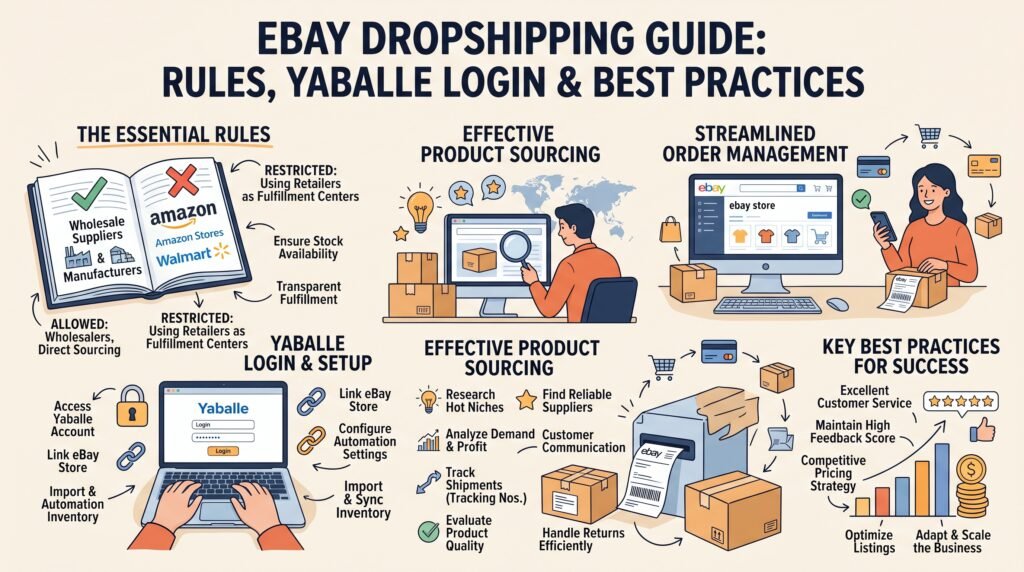
What Is eBay Dropshipping?
eBay dropshipping is a fulfillment model where a seller lists products on eBay and works with a supplier to fulfill customer orders. The seller may not physically handle the product. Instead, the supplier sends the purchased item to the buyer.
The important point is that the seller remains responsible for the transaction. eBay states that dropshipping fulfilled directly by a wholesale supplier is allowed, provided the seller meets the relevant requirements. Sellers are still responsible for delivering orders within the promised timeframe and maintaining customer satisfaction.
This makes supplier selection an important part of the business. A seller should know where products come from, how quickly orders can be processed, what happens when an item is unavailable, and how returns will be handled.
Is Dropshipping Allowed on eBay?
Yes, but there are conditions.
eBay permits dropshipping when sellers fulfill orders through a wholesale supplier or use inventory they own and have a suitable third party handle fulfillment. However, eBay does not permit a seller to list an item and then purchase it from another retailer or marketplace after the eBay sale so that the retailer ships it directly to the customer.
This distinction is important because two businesses may both call themselves dropshipping while operating in very different ways.
Dropshipping Methods eBay Allows
A compliant setup can involve a wholesale supplier that has an agreement with the seller before products are listed. The supplier can then fulfill orders on behalf of the seller.
Another permitted arrangement can involve inventory owned by the seller that is stored or fulfilled by a third party. In that situation, the fulfillment provider handles the physical shipping while the seller remains responsible for the eBay transaction.
The relationship with the supplier should be clear before products are listed. Sellers should also understand the supplier’s shipping, return, inventory, and customer service procedures.
Retail Arbitrage Can Create Problems
One of the biggest mistakes in eBay dropshipping is listing products from another retail website and waiting until the product sells before purchasing it from that retailer.
For example, a seller may find a product on an online retail marketplace for $30 and list it on eBay for $45. After an eBay customer buys it, the seller purchases the product from the retailer and enters the customer’s shipping address.
That model can violate eBay’s dropshipping policy because the seller is sourcing the item from another retailer or marketplace after the sale. eBay can take enforcement action when sellers fail to follow its policies.
What Responsibilities Does an eBay Dropshipper Have?
Dropshipping does not remove the seller’s responsibilities. In fact, sellers need to pay close attention to several parts of the transaction.
Accurate Product Listings
Product descriptions, images, specifications, availability, variations, and shipping information should accurately represent what the customer will receive.
A seller should not make claims that cannot be supported by the supplier’s actual product or service.
Accurate listings also help reduce disputes. When buyers understand what they are purchasing before placing an order, there is less chance of confusion about size, condition, compatibility, delivery time, or included accessories.
Delivery and Handling Times
Shipping promises need to be realistic.
If a supplier normally takes several days to process an order, the eBay listing should not promise a much shorter handling period simply to make the product look more attractive.
eBay makes sellers responsible for safe delivery within the timeframe stated in their listings.
This means inventory and supplier monitoring should be treated as an important part of the business rather than an optional task.
Returns and Refunds
Returns are another area that sellers should plan before listing products.
A dropshipping seller needs to understand the supplier’s return procedure and compare it with the seller’s obligations on eBay. If a customer wants to return an item, the seller cannot simply tell the buyer to deal with the supplier without considering the seller’s responsibilities under eBay’s policies and applicable consumer laws.
Clear return information can also prevent unnecessary disputes.
What Is Yaballe Used For?
Yaballe is a platform designed to help sellers manage parts of an eBay dropshipping operation. Its services include listing management, product monitoring, repricing, order fulfillment, and tracking workflows.
For sellers managing many products, automation can reduce repetitive work. Instead of manually checking every listing for stock and price changes, software can help monitor information and update products according to the seller’s chosen settings.
However, automation should be viewed as a management tool rather than a replacement for seller responsibility.
Using software does not automatically make a business model compliant. The seller still needs to understand eBay’s policies, choose suitable suppliers, provide accurate information, and handle customer obligations.
How Yaballe Login Fits Into an eBay Dropshipping Workflow
People searching for yaballe login may simply be trying to access their Yaballe account and manage their connected stores.
After accessing the platform, sellers can use its available features to manage different parts of their dropshipping workflow. Depending on the account setup and selected services, this can include listing products, monitoring stock, adjusting prices, managing orders, and updating tracking information.
Yaballe also provides a help center with guidance for account setup, products, orders, selling channels, settings, and troubleshooting.
The login itself is only the starting point. The more important question is how the seller configures the account and uses automation in a way that supports accurate listings and reliable fulfillment.
Connecting an eBay Account
Yaballe provides options for connecting an eBay store to the platform. Its documentation explains that sellers may be asked to link their eBay account when setting up or reconnecting their store.
When connecting third party software to an eBay account, sellers should review the permissions and account settings involved. They should also use the official service and avoid entering account credentials into websites that are not trusted.
Account security matters because an eBay store may contain customer information, order details, payment related information, and business data.
Product Research and Supplier Selection
Successful dropshipping starts with products that can actually be sourced and fulfilled reliably.
A product may have strong demand but still be a poor choice if its supplier frequently changes prices, runs out of stock, delays orders, or has difficult return procedures.
Yaballe’s own guidance for Amazon to eBay dropshipping points out that products that perform well on Amazon may not necessarily perform well on eBay. It also highlights the importance of considering fulfillment and supply issues when selecting products.
For this reason, sellers should consider several factors before listing a product:
Supplier Reliability
Look at processing times, inventory consistency, product quality, packaging, and return procedures.
Product Availability
A product that frequently goes out of stock can create canceled orders and unhappy buyers.
Profit Margin
Calculate the product cost, eBay fees, shipping expenses, returns, refunds, taxes where applicable, and other operating costs before deciding whether a product is profitable.
Brand and Intellectual Property Issues
Sellers should also be careful with branded products. Products that involve trademarks, copyrighted material, or other intellectual property rights can create additional risks.
A product should never be listed simply because another seller is offering it.
Common eBay Dropshipping Risks
Dropshipping can be profitable, but it comes with risks that should be understood before investing time or money into the business.
Account Restrictions
Failure to follow eBay policies can lead to listing removals, selling restrictions, reduced visibility, loss of certain protections, or account suspension.
Supplier Price Changes
A supplier may increase the cost of a product after it has already been listed on eBay. If the seller does not monitor the change, the resulting sale may have little or no profit.
Stock Problems
A supplier can run out of inventory without warning. If the seller continues accepting orders, customers may experience delays or cancellations.
Shipping Delays
The seller remains responsible for meeting the delivery expectations stated in the listing. A supplier’s delay can therefore become the eBay seller’s problem.
Returns
A supplier may have a different return policy from eBay. Sellers need to understand both before offering products to customers.
How to Build a Safer Dropshipping Workflow
A good workflow starts before the product is listed.
First, identify a supplier that you have the right relationship with and that can reliably fulfill your orders. Then review the product information and make sure your eBay listing accurately represents the item.
Next, calculate your expected costs and profit margin. Set realistic handling and delivery information based on actual supplier performance.
After the product is live, monitor stock, pricing, orders, tracking, returns, and customer messages. Automation tools can help with repetitive parts of this process, but important business decisions should still be reviewed by the seller.
If you use Yaballe, regularly review your settings and connected accounts. Yaballe’s documentation also notes that different eBay marketplaces can require separate account configurations, so sellers managing multiple markets should check the platform’s current requirements before making changes.
Legal and Compliance Considerations
eBay dropshipping involves more than marketplace rules. Depending on where the seller operates and where customers are located, tax, consumer protection, product safety, intellectual property, shipping, and other laws may apply.
eBay itself notes that sellers are responsible for complying with applicable laws and regulations and that its guidance does not replace professional legal or tax advice.
International sellers may face additional requirements. An eBay listing can potentially reach buyers in other countries, and transactions may be subject to the rules and laws applicable to the relevant marketplace and shipment.
For a business operating at significant scale, speaking with a qualified lawyer or tax professional in the relevant jurisdiction can be worthwhile.
Frequently Asked Questions
Is eBay dropshipping legal?
Dropshipping itself is not prohibited on eBay. eBay allows certain dropshipping arrangements, including fulfillment through wholesale suppliers. However, sellers must follow eBay’s rules and applicable laws. Buying products from another retailer or marketplace only after an eBay sale and having that retailer ship to the customer is not permitted under eBay’s dropshipping policy.
Is Yaballe allowed for eBay dropshipping?
Yaballe is a third party platform designed to support eBay dropshipping workflows. Using a management or automation platform does not remove the seller’s responsibility to comply with eBay policies. Sellers should review both eBay’s current rules and the platform’s current documentation before using automation.
What does yaballe login mean?
The phrase yaballe login generally refers to accessing a Yaballe account so a seller can manage their dropshipping operations and connected services. Sellers should use the official Yaballe website or support resources when accessing their account.
Can I use any supplier for eBay dropshipping?
No. The supplier should fit eBay’s requirements and be able to fulfill orders reliably. A wholesale supplier relationship is different from simply buying an item from another retailer after an eBay customer has placed an order.
Can automation prevent an eBay suspension?
No automation platform can guarantee that an eBay account will never be restricted or suspended. Sellers remain responsible for their listings, suppliers, fulfillment, customer service, and compliance with eBay policies.
Final Thoughts
eBay dropshipping can be a practical business model when it is built around reliable suppliers, accurate listings, realistic delivery expectations, proper customer service, and compliance with marketplace rules.
The biggest mistake is treating dropshipping as a shortcut around inventory and seller responsibilities. The fact that a supplier handles fulfillment does not change who is responsible to the customer on eBay.
For sellers using Yaballe, the yaballe login is simply one part of a much larger workflow. The real focus should be on choosing suitable products, monitoring supply and pricing, managing orders carefully, and keeping the eBay account in good standing.
Policies and laws can change, so sellers should review the current eBay requirements and obtain professional legal or tax advice when their circumstances require it. This article is intended for general informational purposes and should not be treated as legal advice.