
Introduction
The ecommerce industry has expanded rapidly over the last decade, and new platforms continue to compete with giants like Amazon and eBay. One of the fastest-growing marketplaces today is Walmart Marketplace, which has opened doors for third-party sellers worldwide.
As competition increases, many entrepreneurs are turning to Walmart automation a system that allows sellers to run an online store with minimal manual involvement.
Instead of managing every detail of the business yourself, automation systems or agencies handle product research, listing creation, inventory updates, order fulfillment coordination, and customer support.
This guide explains exactly how Walmart automation works, what it includes, how money is made, and whether it is a viable business model in 2026.
Understanding Walmart Marketplace
Before understanding automation, it is important to understand the platform itself.
Walmart is one of the largest retail corporations in the world, and its online marketplace allows approved sellers to list and sell products directly to customers.
Unlike traditional retail, Walmart Marketplace operates as a third-party seller platform, meaning:
- Walmart provides traffic and trust
- Sellers manage products and pricing
- Fulfillment can be self-managed or outsourced
- Customers buy directly through Walmart.com
Walmart has strict approval standards, which makes it more controlled compared to other marketplaces.
What Is Walmart Automation?
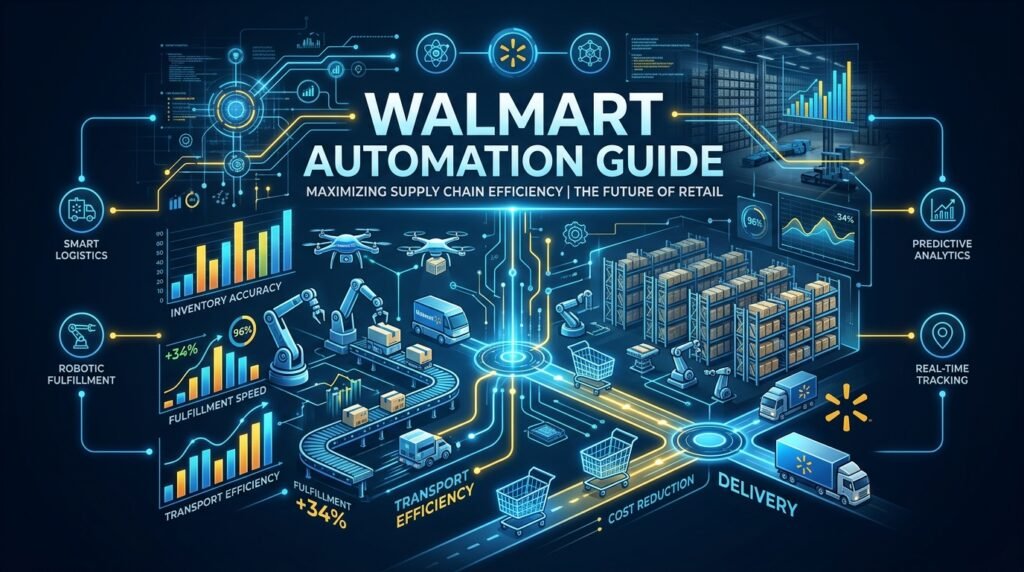
Walmart automation is a business model where most operational tasks of running a Walmart Marketplace store are handled by a third-party service, software system, or management team.
Instead of doing everything manually, automation covers:
- Product research and selection
- Supplier sourcing
- Listing creation and optimization
- Inventory management
- Order processing coordination
- Pricing adjustments
- Customer service handling
The goal is to create a semi-passive ecommerce business where the owner mainly provides capital and oversight while experts handle execution.
How Walmart Automation Works (Step-by-Step)
1. Walmart Seller Account Setup
The process starts with creating and getting approval for a Walmart seller account.
This includes:
- Business verification
- Tax documentation
- Identity verification
- Bank account setup
- Store approval process
Walmart is selective, so account approval is more strict compared to eBay or other platforms.
2. Product Research and Market Analysis
Product research is one of the most important parts of automation.
Automation teams analyze:
- Demand trends on Walmart.com
- Competitor pricing
- Search volume and keywords
- Profit margins after fees
- Shipping feasibility
Common winning product categories include:
- Home essentials
- Kitchen appliances
- Health & personal care
- Baby products
- Fitness and wellness items
The goal is to find products that are in demand but not overly saturated.
3. Supplier Sourcing and Procurement
Once products are selected, suppliers are sourced from:
- Domestic US wholesalers
- International manufacturers
- Private label suppliers
- Dropshipping networks (in approved cases)
The automation team ensures:
- Competitive cost per unit
- Reliable shipping times
- Consistent inventory supply
- Product quality standards
Supplier selection directly impacts profitability and account health.
4. Listing Creation and Optimization
After sourcing, products are listed on Walmart Marketplace.
This step includes:
- Keyword-optimized product titles
- SEO-friendly descriptions
- Bullet point formatting
- High-quality images
- Pricing strategy setup
Walmart SEO is essential because product visibility depends heavily on:
- Relevance
- Price competitiveness
- Seller performance metrics
Well-optimized listings improve rankings and conversions.
5. Pricing and Inventory Automation
Automation systems continuously monitor:
- Competitor pricing
- Demand fluctuations
- Inventory levels
- Profit margins
Pricing tools adjust product prices automatically to remain competitive while maintaining profitability.
Inventory automation ensures:
- No stockouts
- No overselling
- Proper stock forecasting
6. Order Processing and Fulfillment
When a customer places an order:
- Order is automatically forwarded to the supplier
- Supplier ships product directly or to Walmart fulfillment partners
- Tracking information is updated in the system
- Customer receives updates through Walmart
Walmart also offers Walmart Fulfillment Services (WFS), which is similar to Amazon FBA.
7. Customer Service Management
Customer support is a critical part of Walmart seller performance.
Automation systems handle:
- Customer inquiries
- Return requests
- Refund processing
- Shipping complaints
Fast response times are important because Walmart tracks seller performance metrics closely.
8. Scaling the Business
Once the store becomes stable, scaling includes:
- Expanding product catalog
- Increasing ad budget (Walmart Ads)
- Adding multiple suppliers
- Expanding into new niches
- Improving conversion rates through optimization
Scaling is where long-term revenue growth happens.
Why Entrepreneurs Choose Walmart Automation
1. High Growth Marketplace
Walmart Marketplace is still growing compared to Amazon, which means:
- Less saturation
- More opportunity for new sellers
- Strong buyer trust
2. Lower Competition (Compared to Amazon)
While competitive, Walmart still has:
- Fewer sellers
- More controlled entry
- Higher quality listings overall
3. Scalable Infrastructure
Walmart provides:
- Built-in traffic
- Trust from brand reputation
- Fulfillment options (WFS)
4. Semi-Passive Business Model
Once automation is in place:
- Daily operations are minimized
- Systems run continuously
- Owner focuses on scaling and capital
Costs of Walmart Automation
Initial Costs
- Store setup and approval assistance
- Inventory investment
- Automation service fees
- Product listing setup
- Branding (if private label)
Ongoing Costs
- Walmart seller fees
- Advertising (Walmart PPC ads)
- Inventory restocking
- Fulfillment costs
- Automation management fees
Profit Margins
Typical profit margins range:
- 12%–28% depending on category
- Higher margins for private label products
- Lower margins in competitive retail niches
Risks of Walmart Automation
1. Strict Account Policies
Walmart has strict rules regarding:
- Shipping delays
- Customer satisfaction
- Listing accuracy
Violations can lead to account suspension.
2. Approval Challenges
Not all sellers get approved easily. Walmart requires:
- Established business identity
- Proven ecommerce experience
- Strong operational setup
3. Supplier Dependence
Risks include:
- Inventory shortages
- Delayed fulfillment
- Quality inconsistencies
4. Advertising Costs
Walmart PPC is growing but can become expensive if not optimized properly.
Walmart Automation vs Amazon FBA
| Factor | Walmart Automation | Amazon FBA |
|---|---|---|
| Competition | Lower | Higher |
| Approval process | Strict | Moderate |
| Traffic volume | Growing | Very high |
| Profit margins | Medium–High | Medium |
| Scalability | High | Very high |
Who Should Consider Walmart Automation?
This model is ideal for:
- Investors looking for new ecommerce opportunities
- Entrepreneurs wanting scalable passive systems
- Sellers expanding beyond Amazon
- People with startup capital
It is not ideal for:
- Beginners without investment capital
- People expecting instant profits
- Those unwilling to handle risk
Is Walmart Automation Worth It in 2026?
In 2026, Walmart Marketplace is becoming a strong alternative to Amazon due to:
- Rapid seller growth
- Increasing buyer traffic
- Expansion of Walmart Fulfillment Services
However, success depends on:
- Proper product selection
- Strong supplier management
- Effective automation systems
- Continuous optimization
Walmart automation can be profitable, but it is still a real business with real risks.
Final Thoughts
Walmart automation is best understood as a managed ecommerce system that allows investors to build online stores with reduced operational workload.
It combines:
- Walmart’s growing marketplace
- Automated product management
- Supplier-based fulfillment
- Professional store optimization
When executed correctly, it can become a strong income stream in the ecommerce ecosystem.
However, like all business models, success depends on strategy, execution, and consistent optimization.