
Dropshipping on Walmart has become one of the more talked about ways to start an online business without holding inventory. People are drawn to it because it removes the need for warehouse space, upfront stock purchases, and the usual headaches that come with traditional retail. But like any business model, it works best when you understand how it actually functions, what Walmart expects from its sellers, and how to manage day to day operations without losing track of orders or profit margins.
This guide walks through what Walmart dropshipping really means, how the approval process works, and why the Walmart Seller App has become such a useful tool for people running their store on the go.
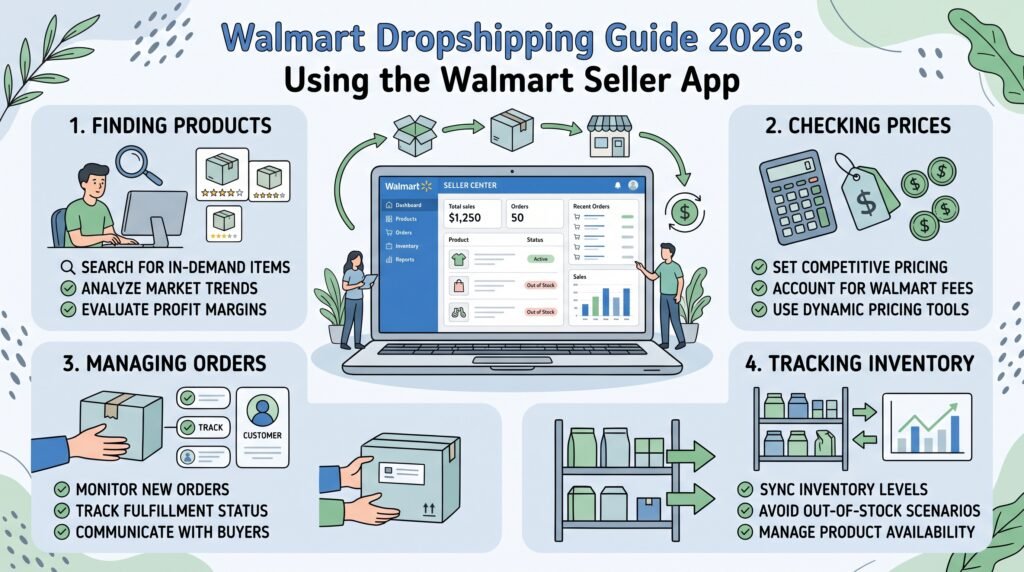
What Walmart Dropshipping Actually Means
Dropshipping is a retail method where a seller lists products on a marketplace but never physically stores or ships the items themselves. Instead, when a customer places an order, the seller forwards that order to a supplier or manufacturer, who then packs and ships the product directly to the buyer. The seller’s job is to manage the storefront, pricing, customer service, and order accuracy, while the supplier handles fulfillment.
Walmart Marketplace allows this model, but it comes with a stricter set of rules compared to some other platforms. Walmart expects sellers to maintain fast shipping times, accurate product listings, and a clean return process. This is different from simply listing a product and hoping a supplier ships it out whenever they get around to it. Walmart holds the seller of record responsible for the entire customer experience, which means the supplier relationship needs to be reliable and well documented.
How the Approval Process Works
Getting approved to sell on Walmart is not automatic. Anyone applying needs to submit business information, tax details, and often a sample of the products they plan to sell. Walmart reviews applications to check that the business is legitimate and capable of meeting its performance standards. Sellers who plan to dropship are expected to disclose this in their application, since Walmart wants to know how orders will actually be fulfilled before approving a store.
Once approved, sellers are held to specific metrics such as on time shipping, order defect rate, and cancellation rate. These numbers are tracked closely, and falling below Walmart’s expectations can lead to a suspended account. This is one reason dropshipping on Walmart tends to work better for sellers who treat it as a real business rather than a side experiment, since the platform rewards consistency and penalizes neglect.
Choosing Reliable Suppliers
The success of any dropshipping store depends heavily on the supplier behind it. A seller can build the most attractive product listings on Walmart, but if the supplier ships late, sends the wrong item, or runs out of stock without warning, the seller is the one who absorbs the complaint. This is why experienced sellers spend real time vetting suppliers before adding their products to a Walmart store.
Some sellers work with domestic suppliers to keep shipping times short, since Walmart customers generally expect quick delivery. Others use a mix of wholesale distributors and print on demand services depending on the type of product being sold. Whatever the source, the supplier relationship should include clear communication about stock levels, shipping timelines, and how returns will be handled, since all of these directly affect a seller’s standing on the platform.
Why Order Management Becomes the Hardest Part
Once a Walmart dropshipping store starts getting orders, the real challenge is not finding products, it is staying organized. A seller might be listing products from multiple suppliers, each with their own shipping schedule, tracking system, and return policy. Without a clear system in place, it becomes easy to miss an order, ship something late, or lose track of which supplier is responsible for which item.
This is where having a reliable way to check store performance matters. Sellers need to know at a glance how many orders are pending, which ones need tracking numbers uploaded, and whether any listings have fallen out of stock. Doing this from a desktop alone can be limiting, especially for sellers who are managing their store around a full time job or while traveling.
How the Walmart Seller App Fits Into Daily Operations
The Walmart Seller App gives sellers a way to check on their store without being tied to a computer. Instead of logging into Seller Center every time something needs attention, sellers can use the app to view order status, respond to customer messages, and monitor account health from a phone. For someone running a dropshipping business, this kind of quick access matters because timing plays a big role in keeping performance metrics healthy.
Being able to catch a delayed shipment early, respond to a customer question the same day, or notice a listing issue before it affects sales are all things that become easier with mobile access. The Walmart Seller App does not replace the need for good supplier relationships or accurate listings, but it does make it easier to stay on top of a store that might otherwise be hard to manage from behind a desk all day.
Sellers who dropship often juggle several tasks at once, from sourcing new products to answering customer questions to checking whether an order shipped on time. Having the Walmart Seller App available means these tasks do not have to wait until someone is back at their computer, which can make a real difference when Walmart’s performance standards are based on how quickly issues get resolved.
Pricing and Profit Margins
One area that often surprises new sellers is how thin margins can get once fees are factored in. Walmart charges a referral fee based on the product category, and dropshipping suppliers usually charge their own price on top of the product cost. After accounting for these fees, along with any advertising spend used to get visibility for a listing, the actual profit per sale can be smaller than expected.
Sellers who do well with this model tend to calculate their numbers carefully before listing a product. This means factoring in the supplier cost, Walmart’s referral fee, expected shipping cost, and a reasonable price point that still competes with other listings for the same item. Pricing too low to win the buy box can eat into margins quickly, while pricing too high can mean the listing never gets much visibility at all.
Common Mistakes Sellers Should Avoid
A number of dropshipping stores run into trouble because of avoidable mistakes rather than the business model itself. Listing products without checking real supplier stock levels is one of the more common issues, since it leads to cancelled orders when an item turns out to be unavailable. Another frequent problem is slow response times to customer questions, which can quietly damage account health over time even if no single incident seems serious.
Sellers also sometimes underestimate how strict Walmart is about shipping speed. A supplier that takes too long to fulfill an order can cause a seller’s account metrics to slip, even though the seller themselves did nothing wrong in the moment. This is part of why choosing dependable suppliers and monitoring orders closely, whether through Seller Center or the Walmart Seller App, plays such a large role in whether a dropshipping store lasts.
Handling Returns and Customer Service
Returns are one part of dropshipping that new sellers often overlook until they run into one. Walmart has its own return policy that applies to marketplace sellers, and customers expect the same level of service whether they bought from Walmart directly or from a third party seller. This means a dropshipping business needs a clear process for handling return requests, including who pays for return shipping and how refunds get issued once the supplier confirms the item has come back.
Some suppliers are set up to accept returns directly, while others may ask the seller to handle the return and simply issue a refund without sending the product back. Either way, the seller needs to know this in advance rather than figuring it out during a live customer dispute. Clear communication with the buyer also matters here. A short, honest message about return timelines tends to prevent a small issue from turning into a negative review or a complaint that affects account health.
Customer service in general plays a bigger role in Walmart dropshipping than many people expect going in. Buyers do not always know or care that an order is being fulfilled by a supplier rather than the seller directly, so any delay or mix up still reflects on the seller’s account. Responding quickly to messages, being upfront about shipping times, and following up after a resolved issue all help build the kind of track record Walmart looks for when deciding whether a seller stays in good standing.
Frequently Asked Questions
Does Walmart allow dropshipping for all sellers? Walmart allows dropshipping, but every seller still needs to go through the standard application and approval process. Sellers are expected to disclose their fulfillment method and meet the same performance standards as anyone else on the marketplace.
How fast do orders need to ship? Walmart sets shipping expectations based on the product category and the shipping method selected at checkout. Suppliers need to be able to consistently meet these timelines, since late shipments can affect a seller’s account standing.
Can the Walmart Seller App be used to manage an entire store? The Walmart Seller App covers many of the daily tasks sellers need, such as checking orders, messaging customers, and reviewing account health. Some detailed settings and bulk actions may still be easier to handle through Seller Center on a desktop.
What happens if a supplier runs out of stock unexpectedly? If a supplier cannot fulfill an order, the seller usually needs to cancel it and notify the customer. Frequent cancellations can hurt account performance, which is why checking supplier stock levels regularly is so important.
Is Walmart Dropshipping Worth Starting
Walmart dropshipping can work as a legitimate business model when it is approached with the right expectations. It is not a way to make quick money with no effort, and it does require ongoing attention to supplier performance, pricing, and customer service. For sellers who are willing to put in the work of vetting suppliers, tracking their numbers, and staying responsive to orders, it can become a steady source of income over time.
The tools available to sellers, including the Walmart Seller App, make it more realistic for someone to run this kind of business without being chained to a desk all day. As with any retail venture, the sellers who tend to succeed are the ones who treat their Walmart store as a real business, checking in regularly, fixing problems quickly, and building relationships with suppliers they can count on.